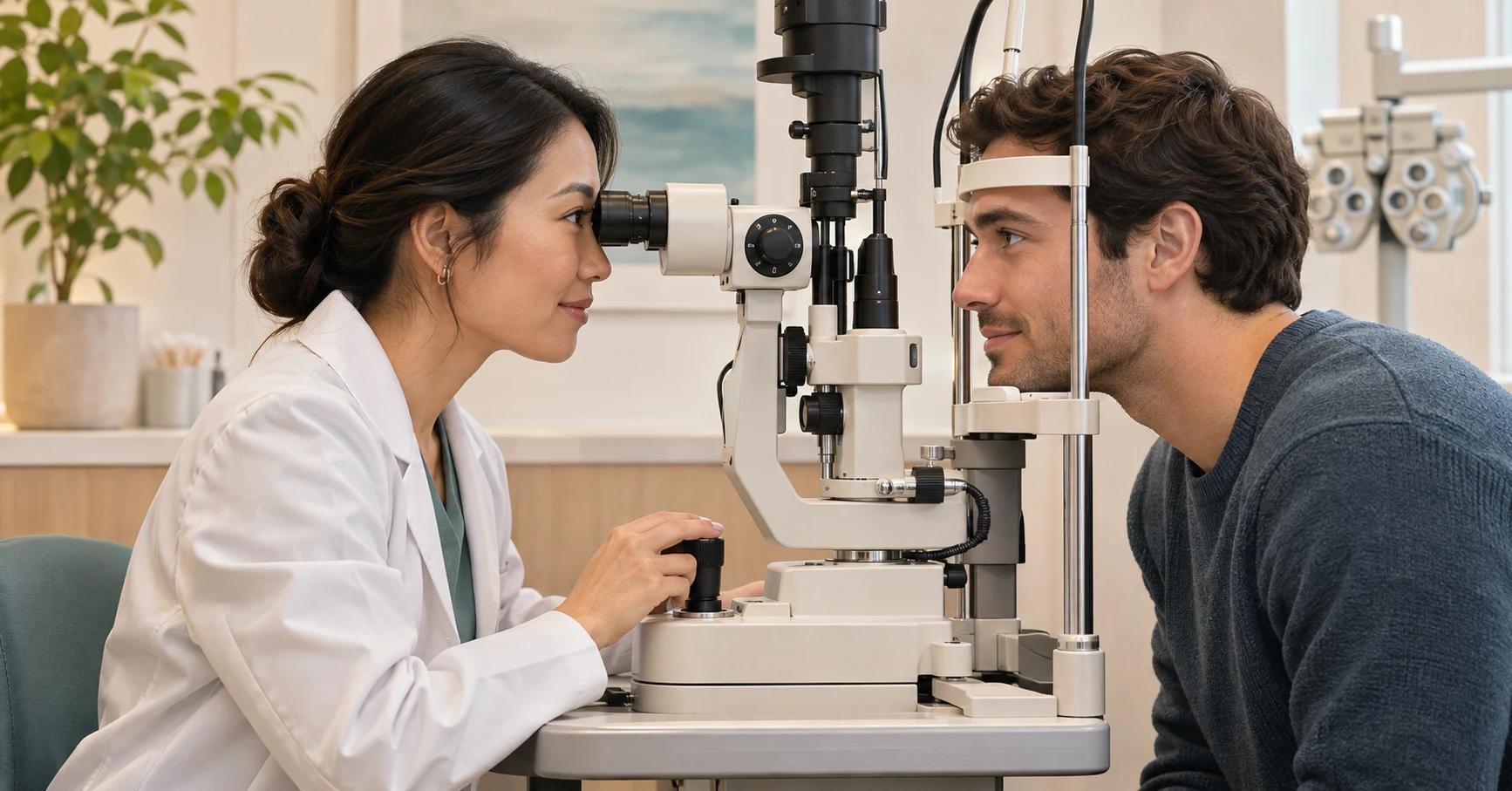
The FDA keeps a public list of lasers approved for LASIK in the United States. The version current as of September 22, 2025 includes the Alcon WaveLight EX500, the Carl Zeiss Meditec MEL90, the Technolas TENEO 317 (Model 2), and the AMO STAR Excimer Laser System with iDESIGN Refractive Studio.
That list is a useful first question for any clinic abroad: which laser, by manufacturer and model? It is not the last question. FDA approval tells you a device passed US review for sale in the United States. It says nothing about how a clinic in Mexico maintains, calibrates or uses it, or about the surgeon. This article covers what US patients should check before they book LASIK in Mexico, and how to plan the follow-up that continues after they fly home.
Start with whether LASIK fits you at all
The FDA's page "When is LASIK not for me?" lists the situations where you are probably not a good candidate for refractive surgery. They include:
- your contact lens or glasses prescription changed in the past year;
- you have a disease, or take a medication, that may affect wound healing;
- you take part in contact sports such as boxing, wrestling or martial arts;
- the surgery could put your career at risk, because some jobs prohibit it;
- you are under 18; the FDA notes that no lasers are approved for LASIK on people under 18.
The same page lists conditions to discuss with a doctor first, including glaucoma, keratoconus, prior eye injuries or surgeries, dry eyes, large pupils and thin corneas. Only a full eye examination can answer these questions. Ask your own eye doctor for a baseline exam before you plan travel, and take the results with you.
Plan the trip around the contact lens break
This is the scheduling detail that catches travelers. The FDA says to stop wearing contact lenses before the initial evaluation:
- soft lenses: 2 weeks;
- toric soft or rigid gas permeable lenses: at least 3 weeks;
- hard lenses: at least 4 weeks.
If the clinic in Mexico does its own evaluation on arrival, that break has to finish before you land. Ask the clinic which measurements it takes, how long the evaluation lasts, and what happens to your booking and deposit if the evaluation shows you are not a candidate. Get the answer in writing.
Plan follow-up for six months, not six days
The FDA says to see your doctor within 24 to 48 hours after surgery, and at regular intervals after that for at least the first six months. The first visit will probably happen in Mexico. Most of the rest will not.
Before you book, call a US optometrist or ophthalmologist near home. Ask whether they will provide post-LASIK follow-up for surgery done in Mexico, what they charge, and what records they need. Then ask the clinic for those records in English: your pre-operative measurements, the laser and treatment settings, and the surgeon's notes.
The FDA also sets out activity limits during recovery. It advises waiting one to three days before non-contact sports, at least four weeks before strenuous contact sports, and avoiding swimming and hot tubs for one to two months. Plan the trip so you are not tempted to swim on day three.
Know the risks the FDA lists
The FDA's page on LASIK risks lists outcomes every patient should read before consenting:
- some patients lose lines of vision on the eye chart that cannot be corrected with glasses, contacts or more surgery;
- some develop glare, halos or double vision that can affect night vision;
- some develop severe dry eye, which may be permanent;
- results for large prescriptions are generally not as good;
- having both eyes treated on the same day is riskier than two separate surgeries.
The last point matters for travel. A clinic may plan both eyes in one session because you are visiting once. Ask the surgeon why they recommend same-day treatment for you, and what the alternative would cost in time and money.
The FDA also says your doctor should give you the laser manufacturer's patient handbook and discuss their own outcomes against it. Ask the clinic for that handbook before you travel.
Check the surgeon
The laser matters. The surgeon matters more, because they decide whether to operate at all. Check three things.
- License. Search the surgeon's full name in the Registro Nacional de Profesionistas, the public license lookup run by Mexico's Secretaría de Educación Pública. Confirm a medical degree is registered.
- Specialty. Ask which council certified the surgeon in ophthalmology, then confirm it with that council directly rather than through the clinic's website.
- Experience with your procedure. Ask how many LASIK procedures the surgeon performs, how many enhancements they do, and what they would do differently for a prescription like yours.
Compare prices the way the FDA suggests
The FDA advises patients not to base the decision simply on cost, and to be wary of "20/20 vision or your money back" offers and package deals, because there are never any guarantees in medicine.
Prices in Mexico are typically 40–70% below US list prices. Savings vary by procedure, provider, and destination. Ask the clinic for an itemized written quote that shows:
- the evaluation and measurements;
- the procedure for each eye and the laser model;
- medicated eye drops;
- follow-up visits in Mexico;
- the enhancement policy: whether a touch-up is included, for how long, and whether it must be done in Mexico.
Then add flights, hotel nights and the cost of US follow-up visits for six months. Compare that total with a US quote.
If you use Heyzl, its vision coordination fee is $249, paid by you and added to your total at booking. It is a fixed fee, not a percentage of the procedure, and it is never deducted from the clinic's payment.
CDC's medical tourism guidance adds two steps for any trip: see a healthcare provider or travel medicine clinician at least 4 to 6 weeks before you go, and bring copies of your medical records.
Frequently asked questions
Do clinics in Mexico use FDA-approved lasers?
Ask the clinic for the laser's manufacturer and model, then check whether that model appears on the FDA's list of approved LASIK lasers. FDA approval covers the device, not the clinic or the surgeon.
How long should I stay in Mexico after LASIK?
The FDA says to see your doctor within 24 to 48 hours after surgery. Ask your surgeon when your first follow-up is and when they will clear you to fly, and book your return after that visit.
Who does my follow-up after I fly home?
The FDA describes follow-up at regular intervals for at least the first six months. Arrange a US eye doctor for those visits before you book, and bring your surgical records in English.
How much does LASIK cost in Mexico?
Ask the clinic for an itemized written quote covering the evaluation, each eye, drops, follow-up visits and the enhancement policy. Add travel and US follow-up costs before you compare it with a US quote.
Your next step: book a baseline eye exam at home, then ask two clinics in Mexico for their laser model, the surgeon's name and an itemized written quote.
Heyzl coordinates the logistics of care in Mexico for a fixed fee by procedure category, paid by the patient. See how Heyzl works.
Heyzl coordinates care logistics. It does not provide medical advice. Talk to a licensed physician about your own situation before making any medical decision.
Heyzl Editorial
Our editorial team consists of medical professionals, travel experts, and patient advocates dedicated to providing accurate, helpful information about medical tourism.